
On a rainy day late June in Lawa Kawemhakan, we started working on a small vegetable garden. We dug, hauled water, and when the rain came down too hard, we moved under a shelter to continue talking about all the plants around us. 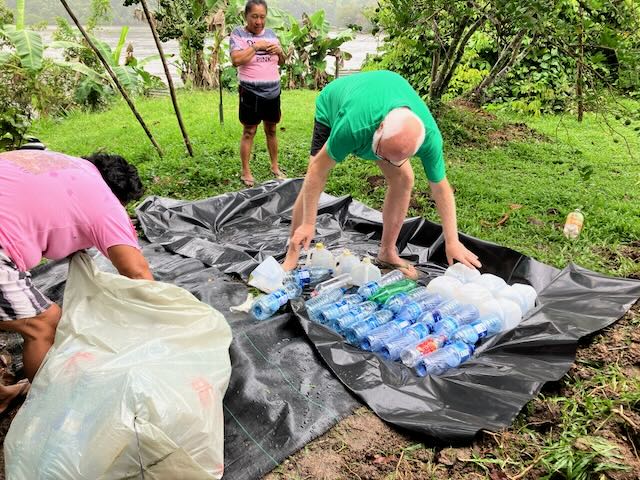
 That’s how the conversation turned to our trip to Canada. Melissa told us that back then, as Wayana, they were very surprised that we liked raw vegetables. Just the idea of us eating raw carrots made her cringe. The Wayana know carrots as baby carrots and canned peas—but raw? No way! Lettuce was also something they wanted nothing to do with. Tomatoes and cucumbers are fine, but raw leaves? Never seen them. It was so nice to chat about all that together for a while.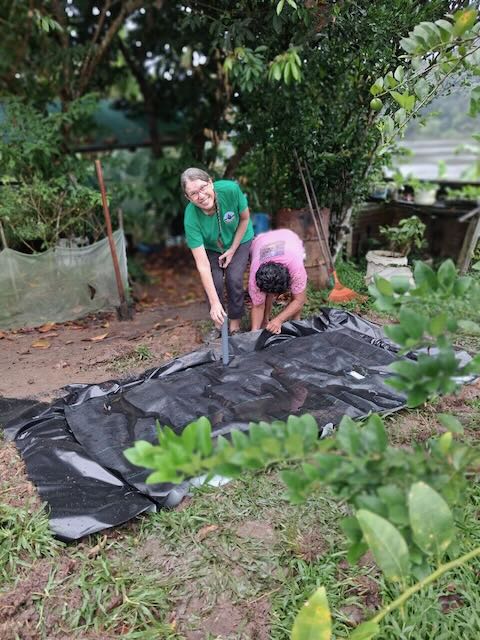
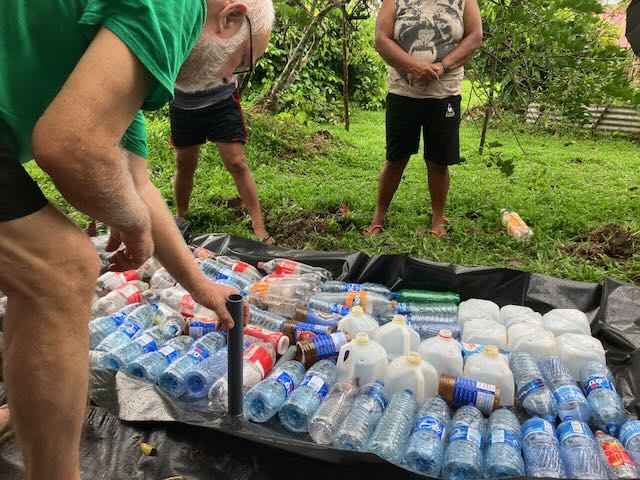
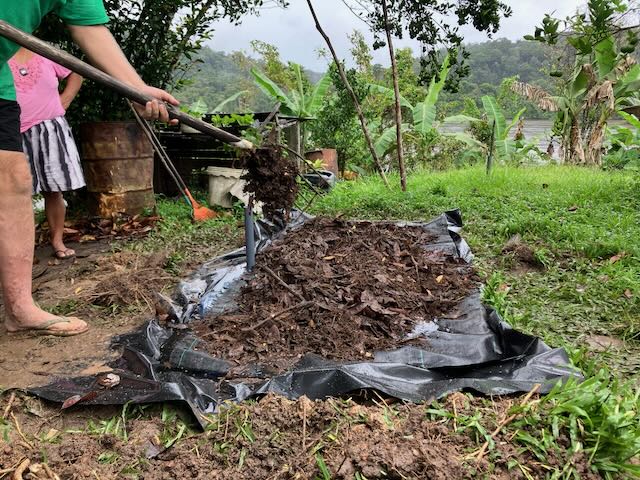 After that, we just carried on working in the drizzle, because we had to finish the model garden with its own water reservoir made from 80 empty soda bottles! We hope this garden will help the plants get through the dry season without any problems. Filling the small pipe with a bucket of water once (or more) a week keeps the water reservoir sufficiently full to continuously supply the plants with moisture. During the dry season, they always ran out of chili peppers. Now we’ll see if this system works well. Eight families have received the tarp and root barrier fabric. Now they first need to save up empty bottles so they can replicate the setup properly.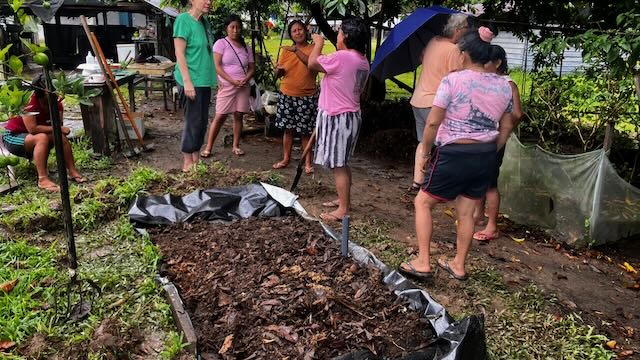
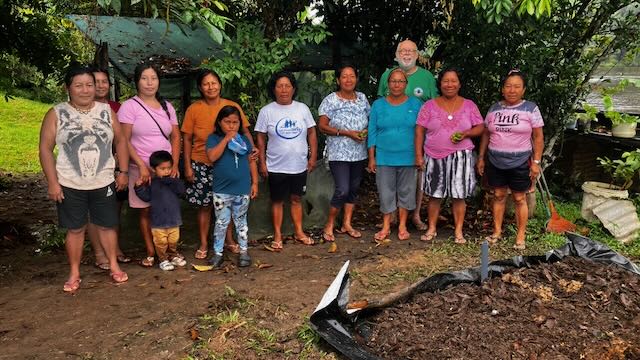 The day before, we reviewed or re-explained the principles of the Foundation for Farming. We brought seeds and seed trays from the city so the women could start sowing right away.
 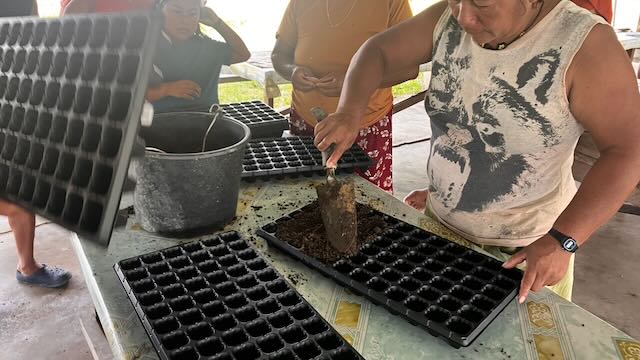 In the village hall—which consists of a corrugated zinc roof—it was a cozy atmosphere with the women all together. They shared stories of their previous (successful) attempts, and, full of anticipation for when the seeds would sprout from the soil, the women headed home at the end of the morning.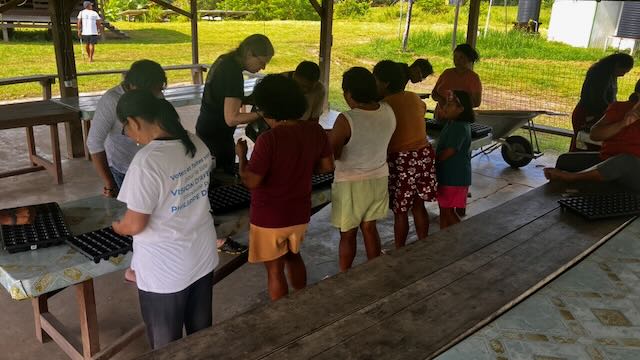
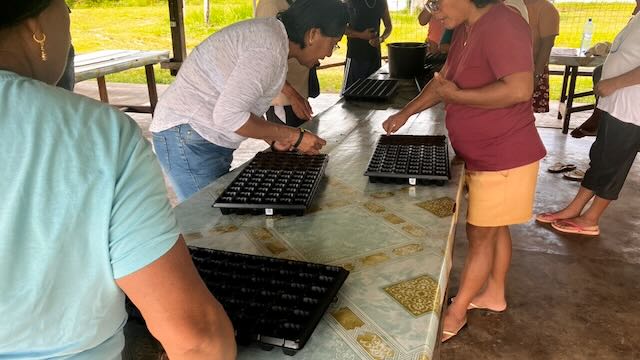 We really enjoy working together on practical projects like this.
This week, Maria Wassink and Marjolein are leading a Bible study for the women, but in the afternoon they’ll spend an hour together doing crafts or crocheting. We’ll share more about that in our next blog.